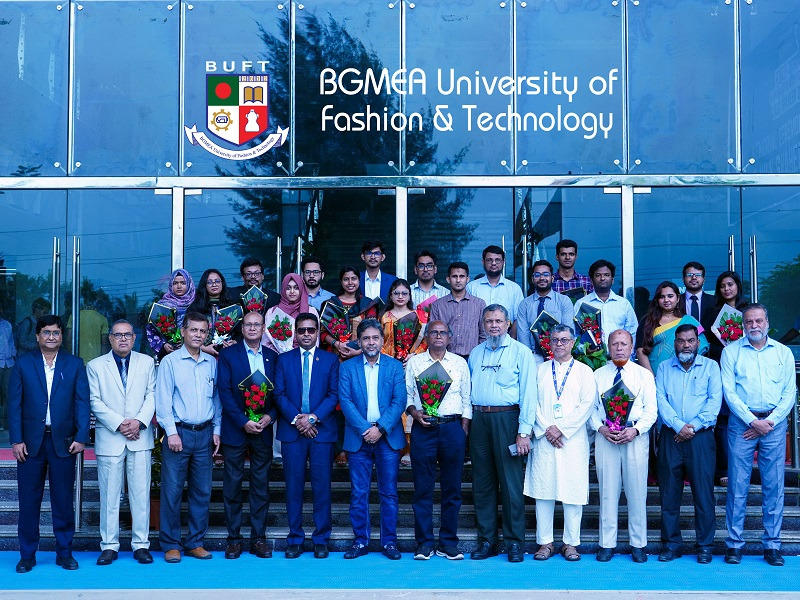


BGMEA University of Fashion & Technology (BUFT) was set up in March 2012 under the Private Universities Act of 2010 and is dedicated to the development of human resources for the readymade garment, textile and allied sectors of Bangladesh. The university aims to establish itself as a ‘center of excellence’ for study, research and development and to serve the nation.
BGMEA University of Fashion & Technology was founded with a goal to establish itself as a "Center-of-Excellence" in higher education and to produce graduates with interfacial skills, competencies and English language skills in order to meet the greater demand of textile and allied sectors of home and abroad emphasizing on innovation and creativity. Since its establishment, we haven't strayed from that vision.


BUFT has been making a significant contribution in higher education since its inception. My best wish to all who have been working hard relentlessly and contributing towards the success of this university.
Chairman, Board of Trustees

When you work full-time while studying, you need to sacrifice personal time, which means that you take your studies seriously. Your ambition should not be only to complete your degree successfully but to make the best out of the time spent studying.
Vice Chancellor (Acting), BUFT